
In one of the verses from thirteen ways of looking at a Blackbird, Wallace Stevens evokes his dilemma – “I do not know which to prefer, The beauty of inflections Or the beauty of innuendoes, The blackbird whistling Or just after”. It is less of a predicament deciding preference for melody or meaning, and more of a testament to the awe – the only emotion we cannot manufacture ourselves – that we experience but rarely ever figure out the exact seat and inspiration of. Awe is generally what we experience when we encounter something vast, open and larger than ourselves, though there’s nothing general about awe – it is always special, always surprising. In literature, awe is felt when one unsuspectingly stumbles upon a grammatical structure, an arrangement, rather rearrangement of words, a line like “…The toughness I was learning was not a martyred doggedness, a dumb heroism, but the art of accommodation and I thought: to be tough is to be fragile; to be tender is to be truly fierce” – and suddenly, the soul feels weighed, the heart feels muscled, the lungs- lungs feel unneeded! Awestruck! Stunned – “What is it about the last part that makes it sink so deep?” “Which indeed is it -beauty of the inflection or the innuendo?” We’ve been told to call such condensations of beauty, such abstractions of grammar, a Chiasmus – like most things concentrated with beauty, its definition and rules don’t do it justice. Meaning delivered on a wave – its crest and trough mirroring yet inverting each other; more recognized by the heart than the mind. The question, if any at all, is what are the chances of stumbling across it outside literature? The even bigger question is -What then?
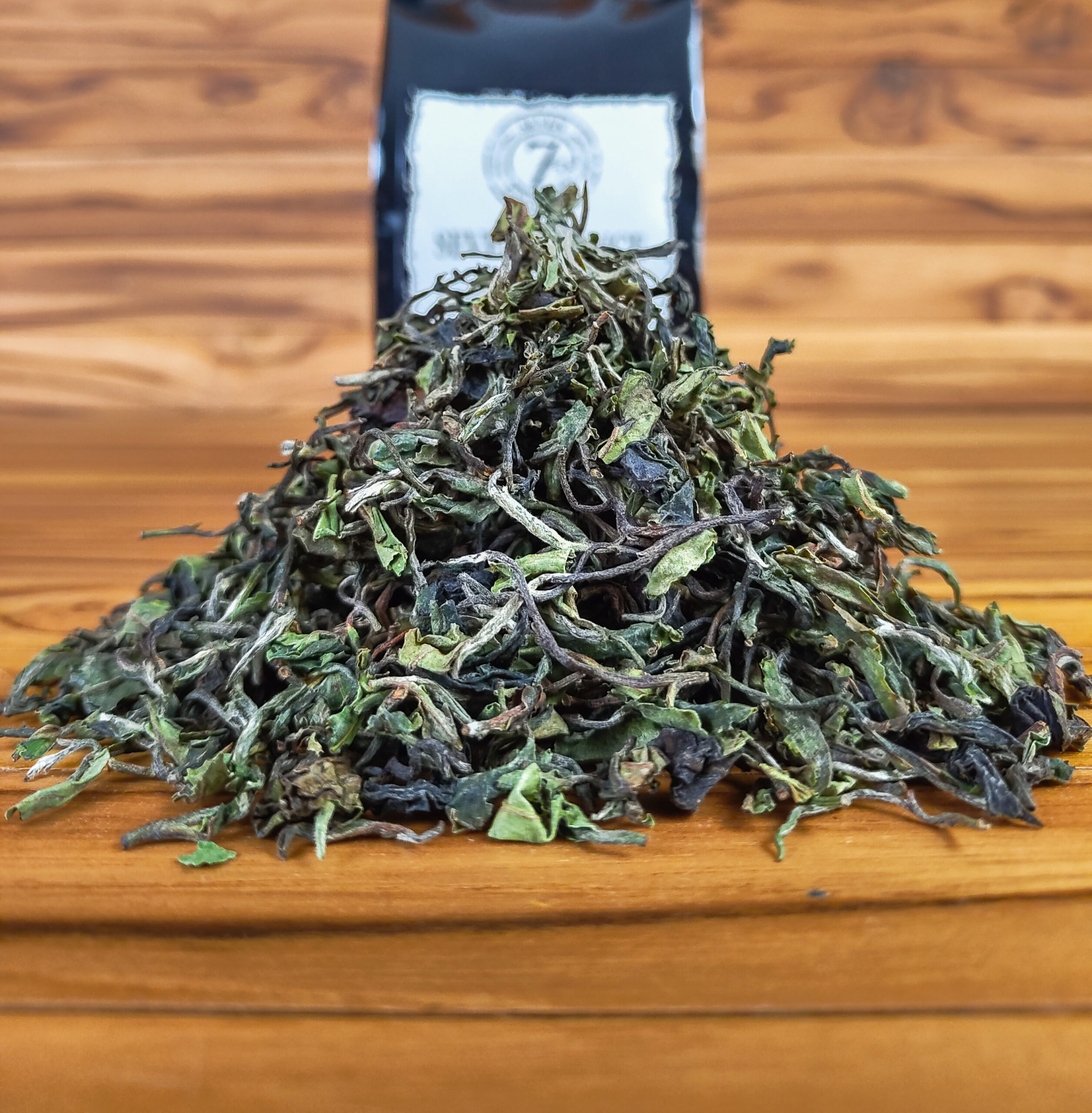
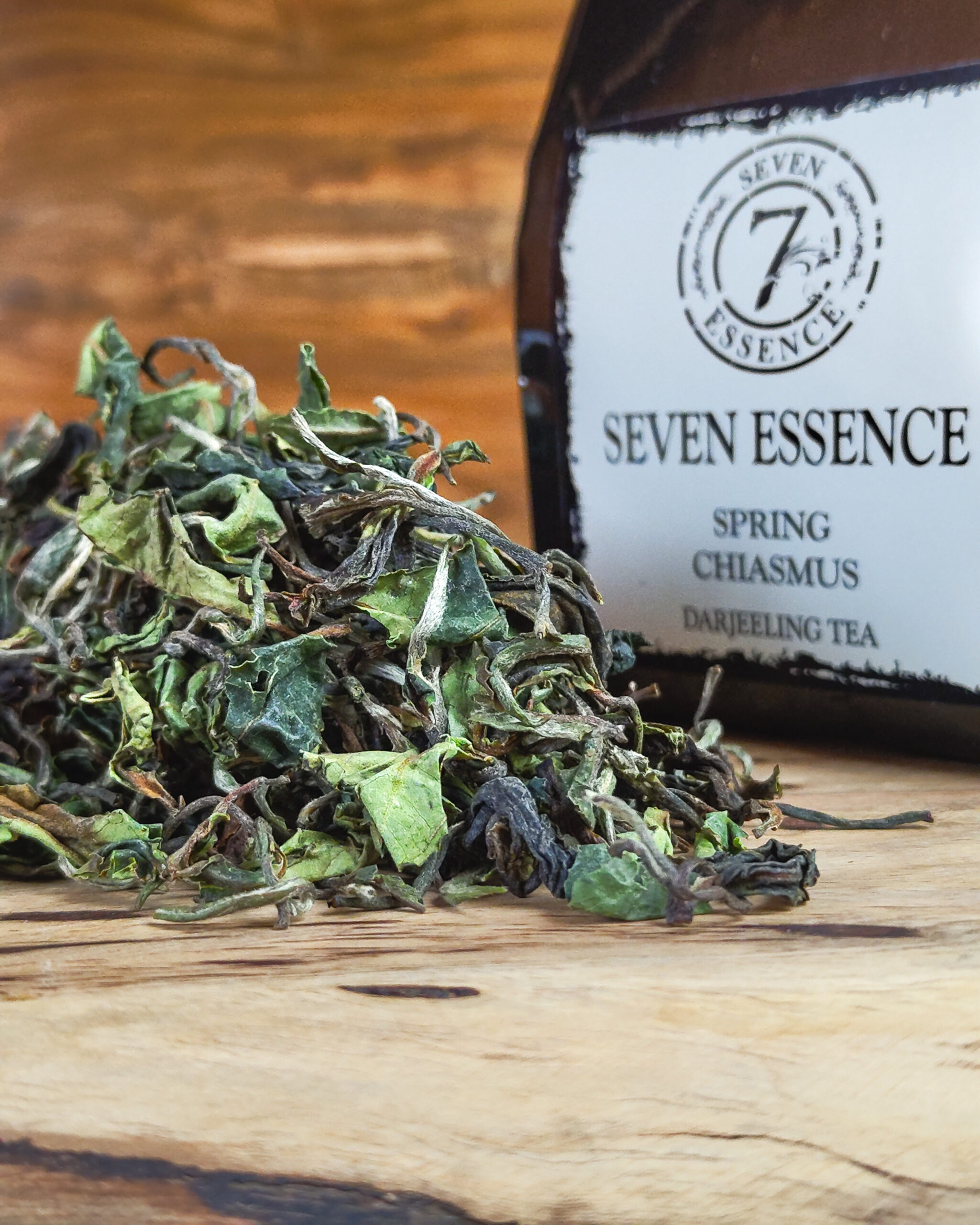
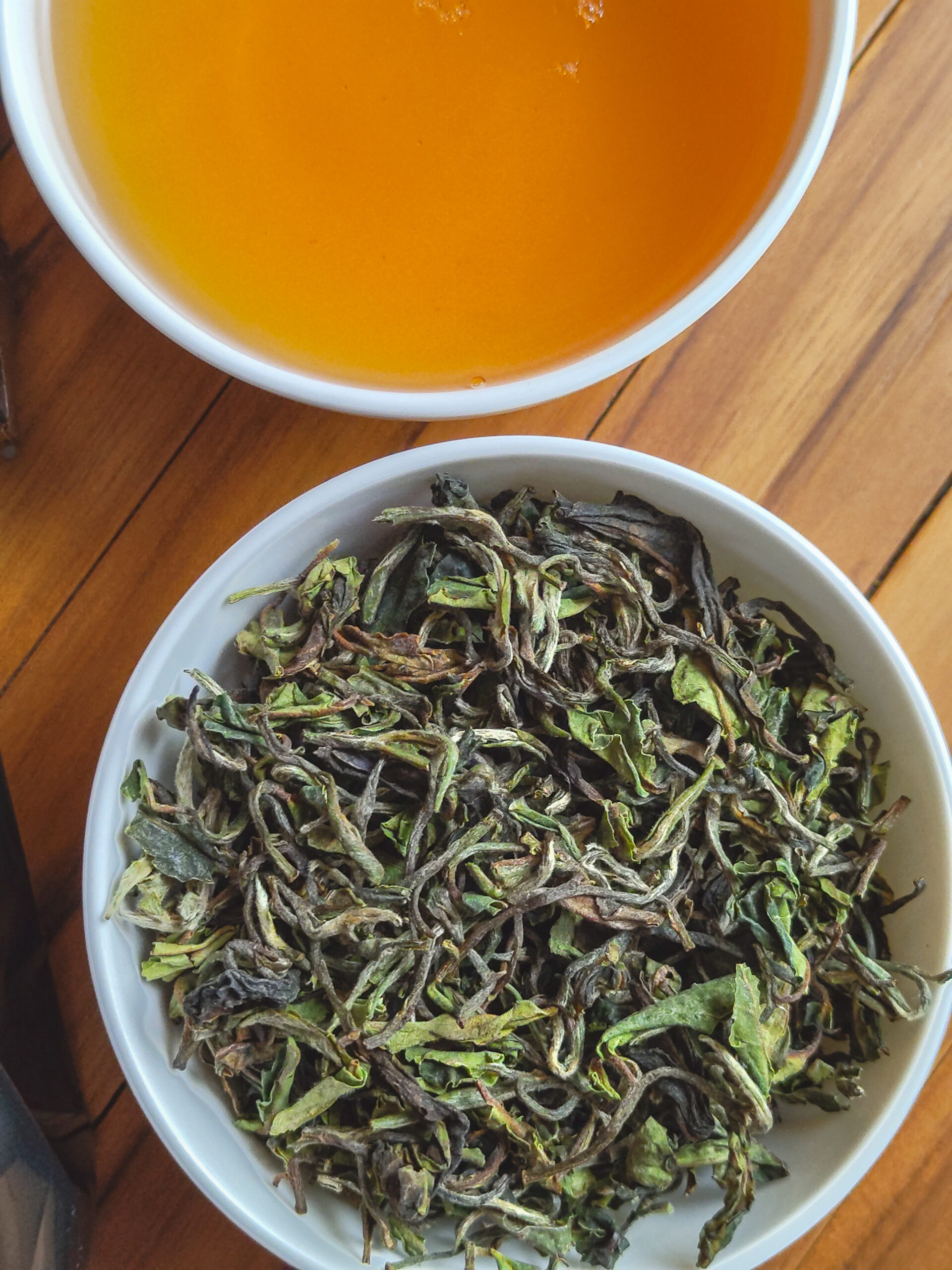
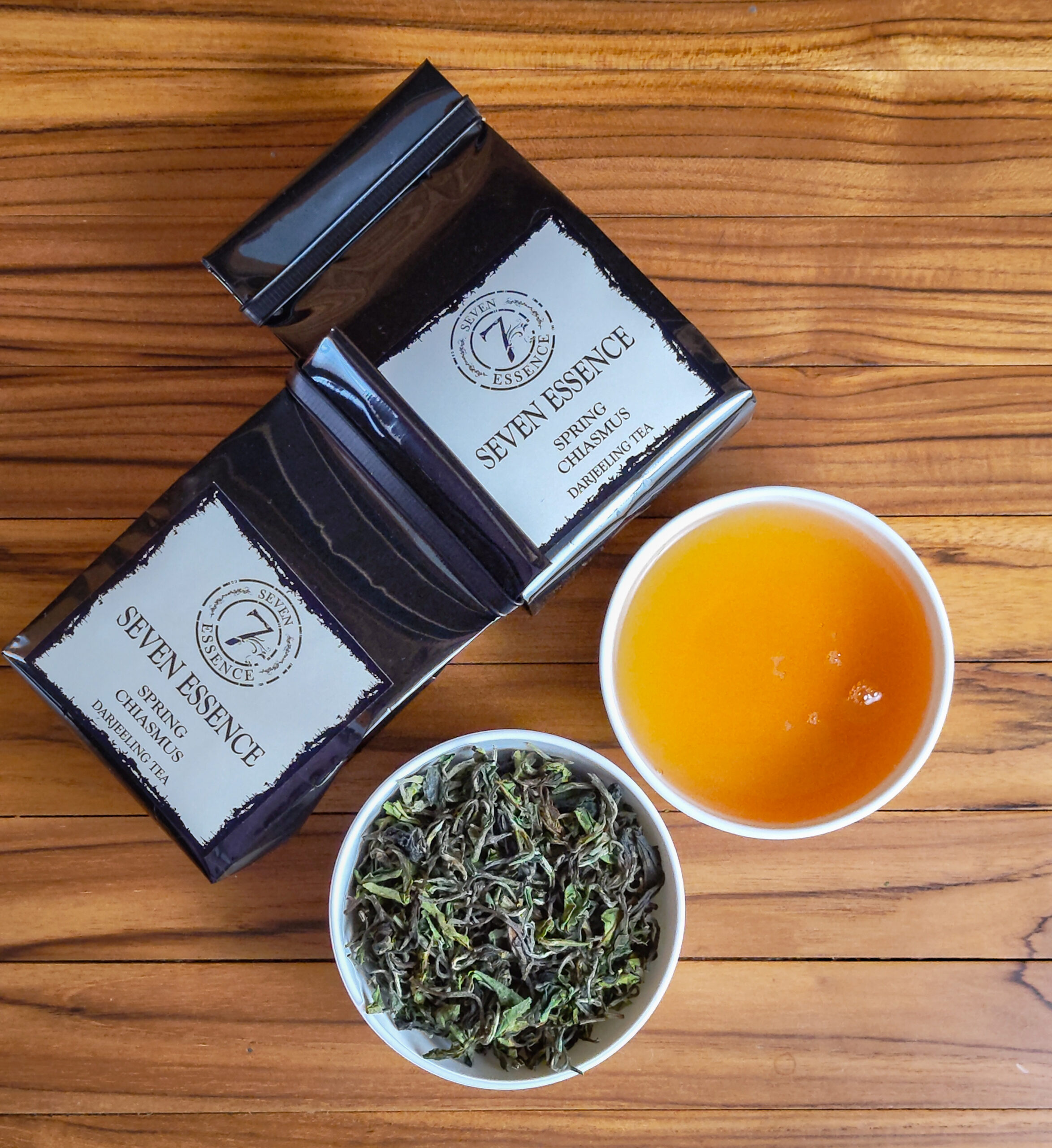
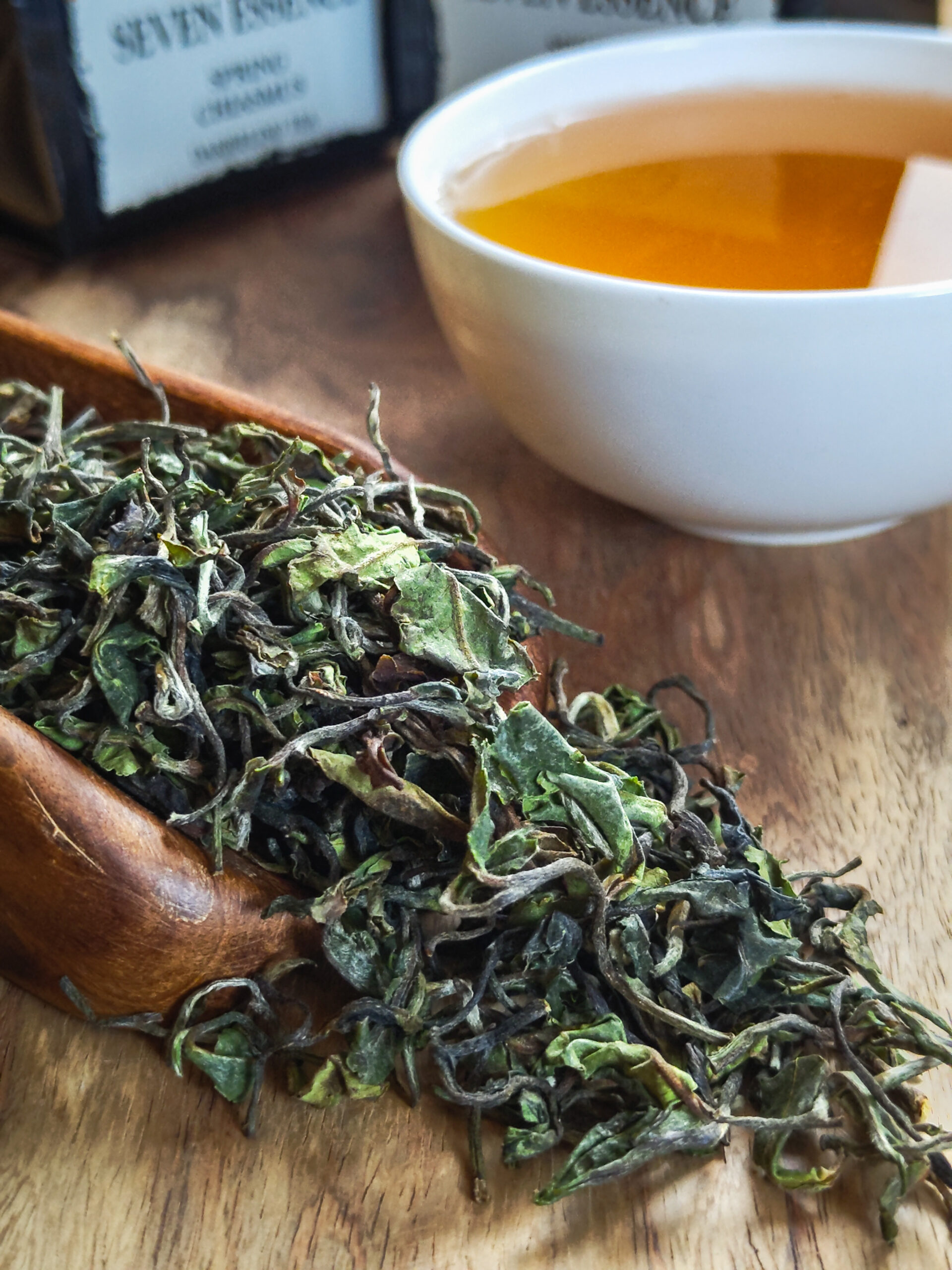
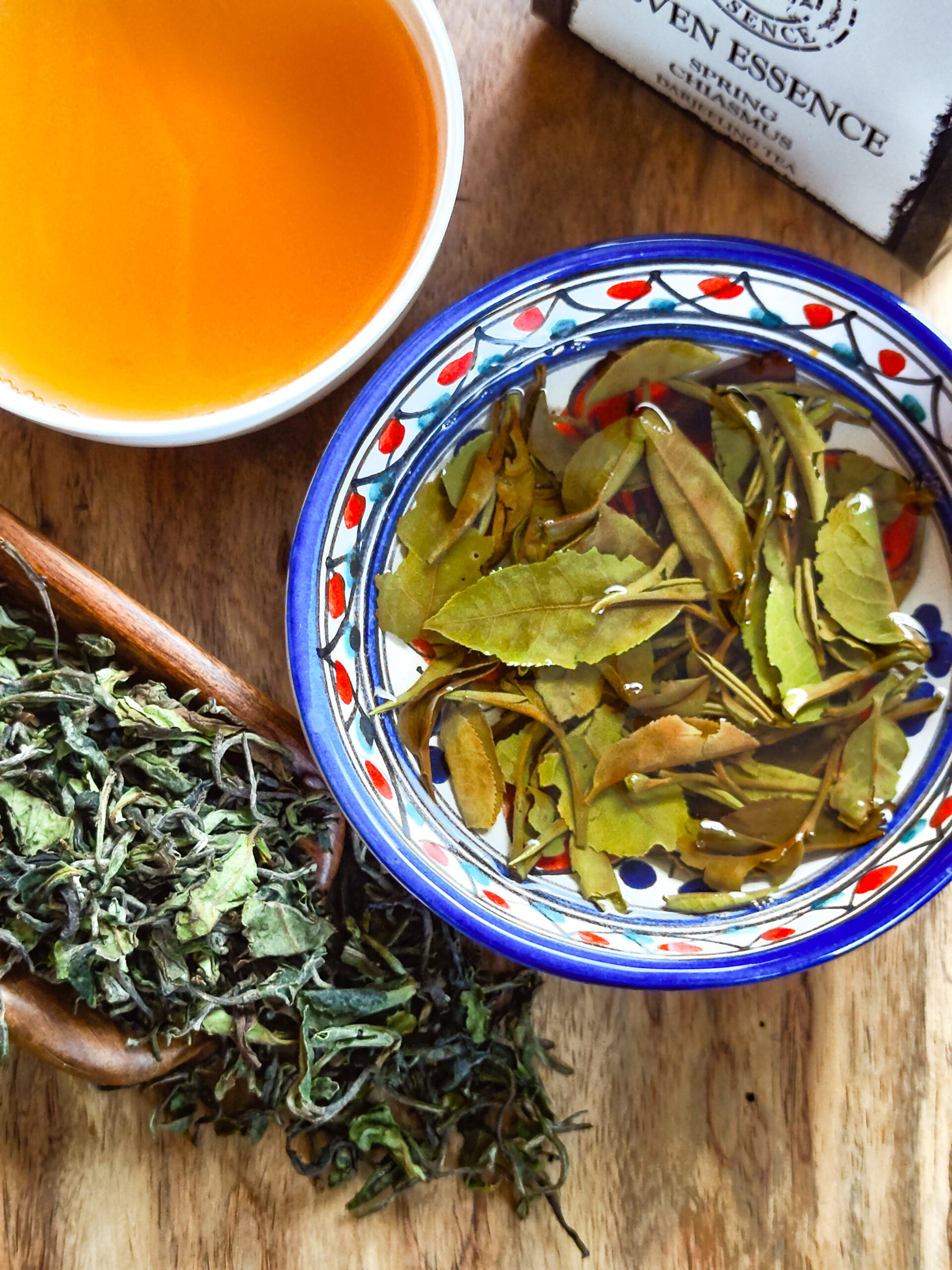
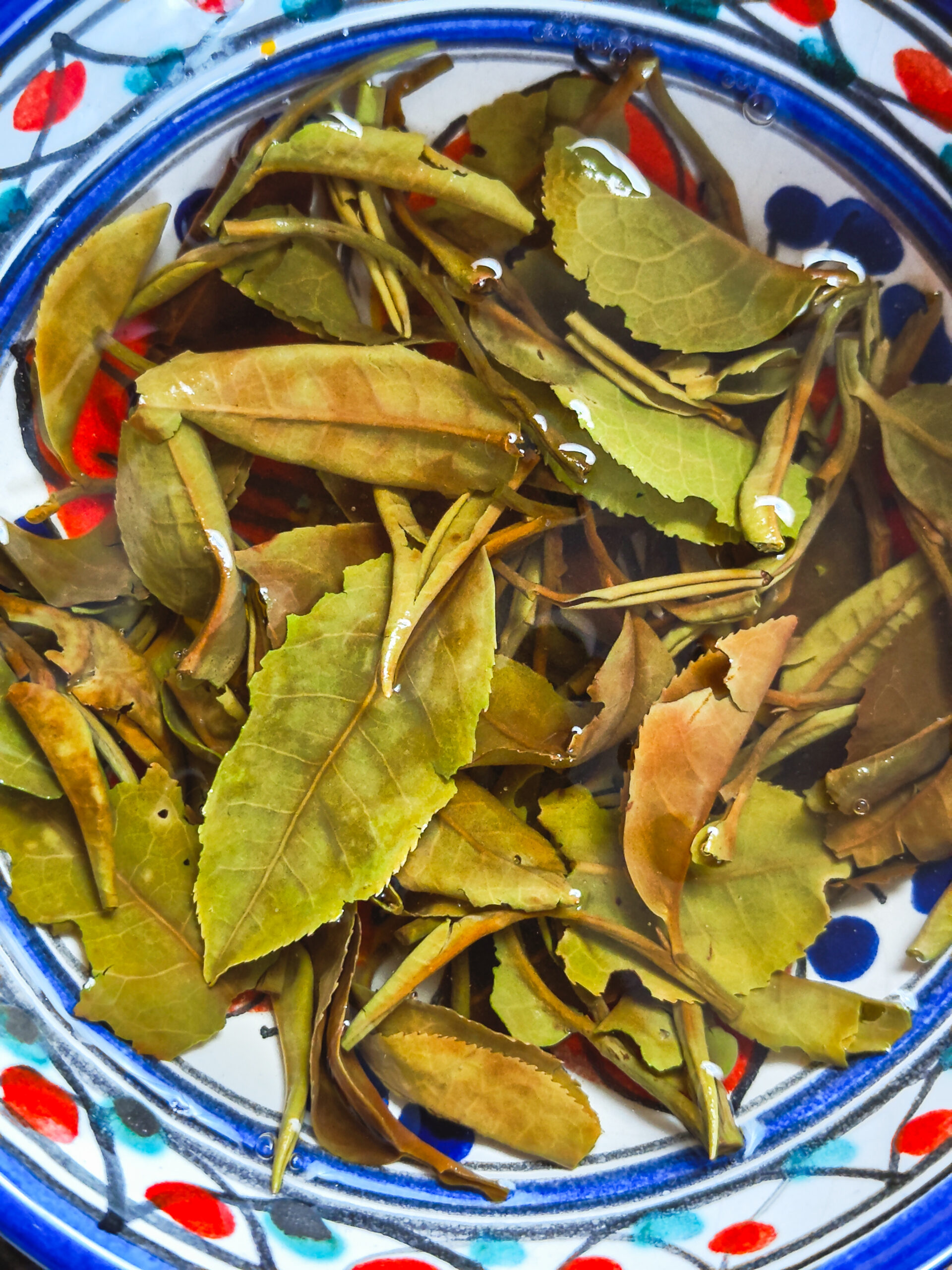
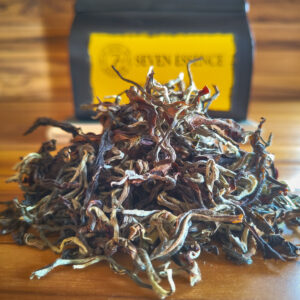
Much closer, meaningfully, to any of the Autumn Oolongs in the second steep, with its Tangy, Metallic finish that vividly reminds of Raw Mangoes and Varnish, the Spring Chiasmus offers its melodic crest and trough retrospectively, in the first steep – a cadence of Mango, Lemon, Litchi and Honey with an inviting Spring freshness, that offers closure, partially or completely, to a heart and a season deprived of one – another way of saying both can begin anew. Either way, phrasings of the Chiasmus soothe, sink deep and stay awhile. With the hand-rolled leaves of the B157 – leaves like verbs that conjugate seasons both literally and metaphorically – taking its melodies and meanings back to its beginnings – beginnings before the Summer ripening turned into Autumn cider; beginnings flowery, mild and easy yet steadfast in deliberation of Olives and Cilantro adding a toughness to its flavorful fragility – the chiasmus is a honey infused inflection mirroring a ripe citrous innuendo.
“I work my jobs, I take my pills. Knot the tie and go to work, unknot the tie and go to sleep. I sleep. I dream. I wake. I sing. I get out the hammer and start knocking in the wooden pegs that affix the meaning to the landscape, the inner life to the body, the names to the things. I float too much to wander, like you, in the real world. I envy it but that’s the dealio— you’re a train and I’m a trainstation and when I try to guess your trajectory, I end up telling my own story” – Richard Siken (Long and short of it).


Reviews
There are no reviews yet.